Thinking about a master-planned community in Clermont but not sure what that really means for your lifestyle and budget? You want convenience, connection, and great amenities without surprises on fees or rules. In this guide, you will learn how these communities work, what amenities to expect locally, how HOA and CDD fees impact monthly costs, and how to compare options with confidence. Let’s dive in.
What a master-planned community is
A master-planned community is a large, coordinated neighborhood built in phases with homes, shared amenities, and infrastructure planned as one integrated whole. Developers lead early planning and construction, then control gradually shifts to resident governance through an HOA, a CDD, or both. The design aims to deliver a connected lifestyle with recreation, trails, and everyday conveniences close to home.
Core features you will see
- Multiple home types: single-family, townhomes, and sometimes apartments or active-adult sections.
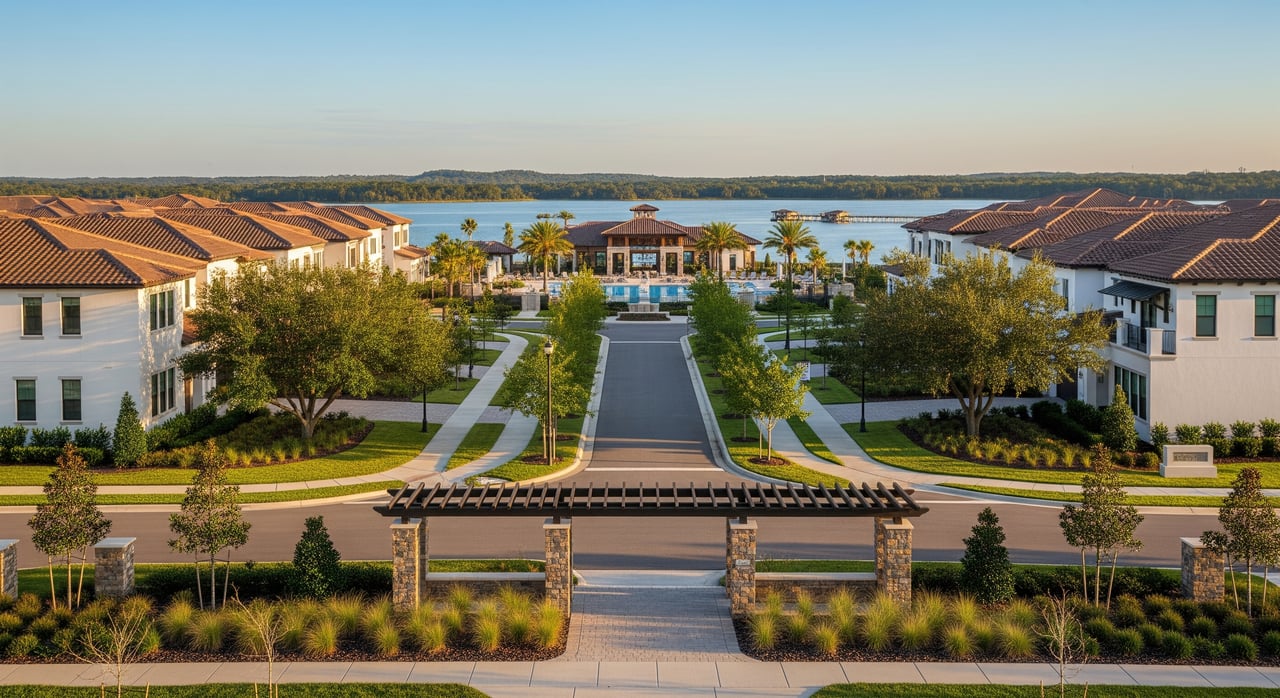
- Central amenity hubs: clubhouses, pools, splash pads, fitness centers, and event spaces.
- Trails and greenways: walking and biking paths, sometimes boardwalks along lakes or wetlands.
- Managed open space: retention lakes, conservation areas, and stormwater systems.
- Access and circulation: internal roads, gated entries, parking and guest policies.
- Services and conveniences: on-site management, planned social calendars, and sometimes childcare or small retail.
How MPCs differ from typical subdivisions
- Larger scale and longer timelines with multiple amenity centers and phases.
- A deliberate mix of homes, parks, trails, and sometimes schools or retail.
- Governance and financing can involve both private associations and special districts.
Clermont context and amenities to expect
Clermont sits in Lake County’s rolling lake country, which shapes how communities look and feel. Developers often place trail networks and scenic overlooks along lakes and conservation areas. You will find family-friendly amenity clusters that make it easy to stay active without driving far.
Common Clermont-area offerings include:
- Community pools, often with separate family, lap, or resort-style areas.
- Multi-use clubhouses with event rooms, kids’ programming, and arts spaces.
- Fitness centers and group classes.
- Trail networks with connections to nearby parks or lakefront paths.
- Playgrounds, splash pads, and youth activities.
- Sports courts and fields for tennis, pickleball, basketball, and soccer.
- Dog parks and pet stations.
- Water access where permitted, such as docks or kayak launches.
Keep in mind that lakeside lots tend to carry premium pricing and may have specific access or maintenance rules. If school access matters to you, verify current school assignments with the Lake County School District for a specific address.
Benefits and trade-offs to weigh
Master-planned communities can offer a built-in lifestyle with amenities and social programming that many families value. The planned trails, playgrounds, and recreational hubs support everyday activity and community connection. On the other hand, organized events can mean more traffic around clubhouses at peak times, and association rules may be more detailed than in a standalone subdivision.
Questions to consider:
- Do you prefer a full calendar of community events or a quieter setting?
- Are the rules for exterior changes, fencing, and parking a good fit for how you live?
- Does the amenity mix match your daily routine and hobbies?
HOA vs CDD: what it means for your budget
In Florida, you will often encounter two governance layers in larger communities. Understanding each one helps you budget accurately and avoid surprises.
- HOA (Homeowners Association): A private association that manages common areas, enforces community rules, and collects dues for operations, maintenance, staffing, insurance for common structures, and reserves. HOAs in Florida are governed by Chapter 720, Florida Statutes.
- CDD (Community Development District): A special-purpose local government that can plan, finance, build, and maintain community infrastructure. CDDs commonly fund roads, water management systems, and amenities, then levy assessments to repay bonds and cover operations. CDDs are authorized under Chapter 190, Florida Statutes.
Key practical differences:
- Authority: An HOA is private. A CDD is a public entity with statutory powers. CDD assessments typically appear on your county property tax bill as special assessments.
- Purpose: HOA dues cover ongoing operations and upkeep. CDD assessments fund long-term infrastructure and may include operations for district-managed assets.
- Governance: HOA boards are elected by homeowners, with developer control early on. CDD boards start developer-appointed, then transition to elected supervisors.
How to budget for HOA and CDD
Always treat HOA dues and CDD assessments as recurring housing costs, similar to taxes and insurance. Clarify what is included in HOA dues, such as landscaping or community cable, so you do not budget twice for the same service.
A simple method:
- Add your monthly HOA dues.
- Divide your annual CDD assessment by 12 and add that number.
Illustrative example: If HOA dues are 200 dollars per month and the CDD assessment is 1,200 dollars per year, your monthly add-on to the mortgage, taxes, and insurance is 200 plus 100, which equals 300 dollars. Actual figures vary by community, so verify with association and CDD documents.
Other costs to ask about:
- Special assessments for major repairs or improvements.
- One-time transfer or capital contribution fees at closing.
- Whether your lender counts HOA and CDD in qualification ratios.
Due diligence: documents and questions
Before you go under contract, request and review the following. These items help you understand fees, rules, reserves, and future obligations.
Before contract, ask for:
- Governing documents: CC&Rs, bylaws, and rules. Review architectural controls and exterior change guidelines.
- HOA budgets and reserves: current budget, prior budgets, and any reserve study. Look for healthy reserves to reduce the risk of special assessments.
- Fee schedules and increase policies: timing, frequency, and any planned increases.
- CDD documents: current assessment schedule, bond documents, engineer’s report, and whether any lots have prepaid debt.
- Development phasing and timelines: what is guaranteed now versus planned in future phases, and the projected opening dates for amenities.
- Meeting minutes and enforcement history: look for signs of deferred maintenance, disputes, or pending capital projects.
- Management plan: on-site manager or third-party firm, contract length, and termination terms.
- Insurance coverage: what the master policy covers for common areas versus your individual policy needs.
- Rental rules: any limits on short-term rentals, lease minimums, or caps on the share of rental homes.
At or after contract, verify with title and county:
- Recorded HOA and CDD assessments, liens, or special assessments.
- How CDD charges appear on the property tax bill.
- School zones, utility providers, and any municipal agreements.
- Floodplain status and flood insurance needs for your specific lot, especially near lakes and wetlands.
Quick comparison checklist
Use this short list to compare Clermont communities side by side:
- Location and commute to work, schools, and groceries
- Lot type and setting: lakefront, preserve, interior
- Amenity list: pools, clubhouse, trail miles, sports courts, playgrounds, water access
- Amenity hours, access rules, and guest policies
- HOA dues amount, frequency, and what is included
- CDD assessment amount and how it is collected
- Reserve fund level and date of latest reserve study
- Special assessments, recent or pending
- Architectural review process and exterior restrictions
- Rental restrictions and leasing caps
- Security features and gate access
- Management type and responsiveness
- Developer control status and turnover timeline
- Evidence of deferred maintenance or litigation
- Market comparables and recent resale activity
- School assignment for the address
Local resources to consult
When you narrow your list, use these sources to confirm the details that matter to you:
- Florida Statutes Chapters 190 and 720 for the legal framework of CDDs and HOAs
- Lake County Property Appraiser for property tax bills and special assessment lines
- Lake County Clerk or County Recorder for recorded CC&Rs, plats, and CDD documents
- Lake County School District for school zone verification
- City of Clermont planning department for master plans and approved phases
- Community Associations Institute for guidance on budgeting, reserves, and governance best practices
Is a master-planned community right for you?
If you value convenience, trails, pools, and a built-in social calendar, an MPC can be a great fit. If you prefer fewer rules, less activity, or minimal shared costs, a standalone home or a smaller subdivision may better match your style. Either way, your best decision comes from comparing total monthly costs, understanding governance, and walking the community at typical hours to see daily life in action.
Ready to compare Clermont communities side by side and build a plan that fits your budget and lifestyle? Connect with the Satori Group for a personalized, design-minded approach and local guidance from an experienced team.
FAQs
What is a master-planned community in Clermont?
- A large, phased neighborhood built under a single plan with shared amenities, trails, and infrastructure, shifting from developer control to resident governance over time.
How do HOA and CDD differ in Florida?
- An HOA is a private association that funds operations and enforces rules, while a CDD is a public district that finances and maintains infrastructure through special assessments.
Where do CDD assessments appear on my bill?
- In most cases, CDD assessments show on your Lake County property tax bill as special assessments alongside ad valorem taxes.
What amenities are typical in Clermont MPCs?
- Expect pools, clubhouses, fitness centers, trails, playgrounds, sports courts, dog parks, and in some locations water access such as docks or kayak launches.
What documents should I review before buying in an MPC?
- Request CC&Rs, bylaws, rules, HOA budgets and reserve studies, CDD assessment schedules and bond documents, meeting minutes, management contracts, and development phasing details.